
RomoCoat 1257 Surface Tolerant Epoxy Paint
RomoCoat 1257 Surface Tolerant Epoxy Paint is a two‑component, high‑solids, surface‑tolerant epoxy mastic/primer for heavy‑duty protection of steel in marine and industrial environments, especially where surface preparation is limited.
Product description
- Two‑pack, high‑build polyamide‑adduct cured epoxy with very high volume solids (~80%), giving low VOC and thick films in one or two coats.
- Very hard, tough yet flexibilised film with excellent wetting of marginally prepared steel; cures at relatively low temperatures and acts as a surface‑tolerant epoxy primer or self‑priming coat.
Typical applications
Marine & offshore (immersion and splash zone)
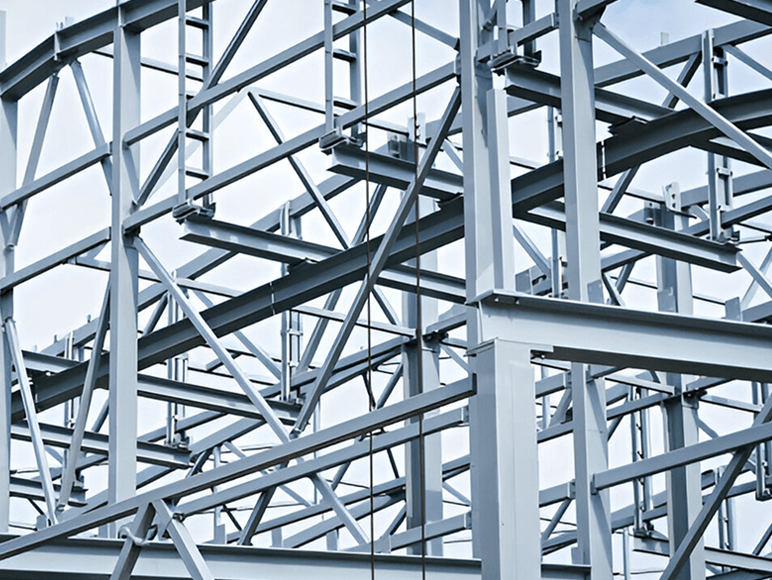
Coastal & industrial structural steel
Heavy‑duty maintenance coating (surface‑tolerant)
New steel & low‑VOC high‑build systems
Product Data Sheet
| Property | Details |
|---|---|
| Mixing ratio | 3 : 1 by volume (Base : Hardener). |
| Pot life | 4–5 hours at 30°C. |
| Application methods | Airless spray, brush (roller possible for touch‑up / small areas). |
| Volume solids | Approx. 80%. |
| Finish | Egg‑shell |
| Colour | Silver aluminium |
| Specific gravity | 1.40 ± 3%. |
| Recommended DFT per coat | 100–125 µm. |
| Theoretical spreading rate | 8.00–6.4 m²/L at 100–125 µm DFT (on smooth surfaces; practical coverage lower due to losses and profile). |
| Drying & curing (30 °C) | Touch dry: 2–3 hours. Hard dry: ~16 hours. Fully cured: ~7 days. |
| Overcoating interval | Minimum: 16 hours at 30 °C |
| Flash point | Above 23 °C. |
| Thinner | Thinner – 1256 system for spray / viscosity adjustment. |
Surface Preparation
Even though it is surface‑tolerant, good preparation is still essential for long‑term performance:
- General:
- Surface must be dry and free from oil, grease, salts, dust and loose rust/paint; high‑pressure fresh‑water wash is recommended before mechanical cleaning.
- Best practice (new steel / severe duty, immersion):
- Abrasive blast cleaning to Sa 2½ with an appropriate profile where possible, especially for ballast tanks and long‑life systems.
- Surface‑tolerant / maintenance situations:
- Where blasting is not possible, clean to St 2/St 3 by power tools (wire brushing, needle‑gunning, grinding) to remove loose rust and poorly adherent coatings, leaving tight rust and sound coatings.
- Remove all salts and contaminants before coating; ensure no loose rust, mill scale or flaking paints.
- Recoating window:
- The stated maximum recoating interval applies to overcoating with itself or compatible topcoats; beyond this, surface must be cleaned and roughened to restore adhesion.
Application guidance
- Mix base and hardener at 3:1 by volume; power‑mix until uniform, scraping sides/bottom of container.
- Use only the recommended “Surface Tolerant Thinner” for thinning; keep added thinner to the minimum needed for spray application.
Airless spray (preferred for high build):
- Typical tip range (by analogy with similar epoxies): around 0.017″–0.021″ with adequate pump pressure to achieve 100–125 µm in one or two passes, avoiding excessive DFT that can cause internal stresses, especially in ballast tanks.
Brush / roller:
- For touch‑up, edges, welds and small areas; may require multiple passes to reach specified DFT.
Systems examples:
- Ballast tanks / immersion (project dependent):
- 2–3 x RomoCoat Surface Tolerant 1257 to achieve 250–350 µm DFT, or 1–2 x 1257 plus compatible epoxy lining, as per specification.
- Atmospheric C4–C5:
- 1 x 1257 (self‑priming) → 1 x 1256 or PU / polysiloxane topcoat (for UV/gross colour retention) for long‑life systems.
Health & Safety
- Avoid inhalation of solvent vapours and spray mist; avoid contact with skin and eyes. Use gloves, goggles and suitable respirator according to local regulations.
- Ensure forced ventilation when working in confined or stagnant areas (tanks, hulls, closed rooms).
- Follow SDS/MSDS for first aid, spill management and disposal; do not discharge into drains or water bodies.
Storage
- Store in a cool, dry, well‑ventilated place, away from direct sunlight, heat and open flames.