
RomoCoat EHB Epoxy High Build Zinc Phosphate Primer
RomoCoat EHB is a two‑component, polyamide‑cured, high‑build epoxy anti‑corrosive primer pigmented with zinc phosphate for structural steel and suitably prepared non‑ferrous substrates.
- Two pack epoxy primer with high volume solids and zinc phosphate anticorrosive pigment.
- Designed for aggressive and industrial atmospheres where resistance to water, moisture, mild chemicals, sultry coastal conditions and abrasion is required, and can be used as a primer in tank lining systems.
Typical Application
- Structural steel and fabrication: beams, columns, platforms, pipe racks and general plant steelwork in coastal/industrial environments.
- Refineries, petrochemical and chemical plants: process structures, tank externals, pipe racks and loading bays.
- Power plants and utilities: boiler structures, ESPs, chimneys, conveyors and cable‑tray supports.
- Marine/coastal on‑shore steel: jetties, cranes, yard structures and port equipment above splash zone.
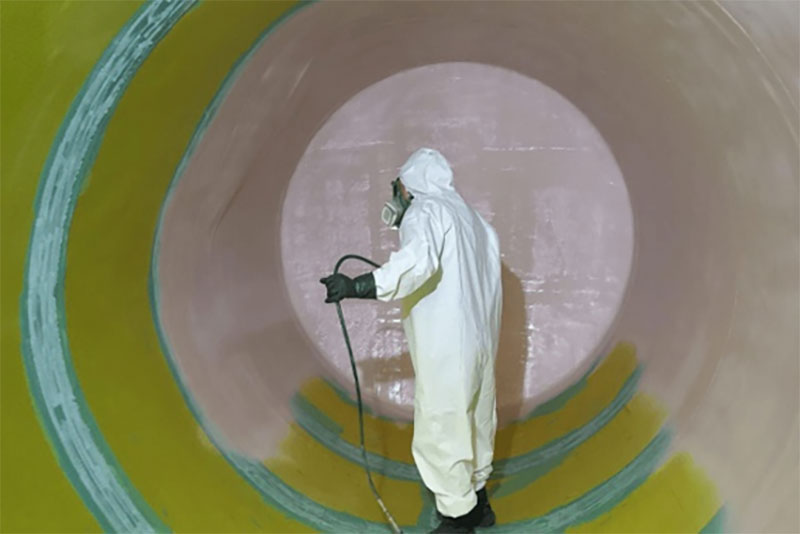
- Tank lining systems: as primer on blasted steel for compatible epoxy tank linings for water, fuels and many chemicals (subject to lining TDS).
- Non‑ferrous/other: suitably roughened aluminium, galvanized steel and some concrete surfaces where an epoxy primer is specified.
Product Data Sheet
| Property | Details |
|---|---|
| Mixing Ratio | 3 : 1 by volume |
| Pot Life | 4-5 Hrs(30°C) |
| Application Methods | Airless Spray, Air Spray, Brush |
| Nozzle Orifice | 0.017” – 0.019” |
| Volume Solids | Approx. 58% |
| Finish | Matt |
| Colour | Grey and Redoxide |
| Recommended DFT / Coat | 50–125 microns |
| Theoretical Spreading Rate | 1 1.60-4.60 M2 /Ltr at above DFT |
| Surface Dry | ~1 hour at 30°C |
| Hard Dry | 16 hours |
| Fully Cured | 7 days at 30°C |
| Over coating Interval | Min: 4 hours. Max: No 4 Weeks |
| Flash Point | Above 23°C |
| Thinner | Epoxy Thinner |
Surface preparation
- Steel: preferably abrasive blast clean to Sa 2½ (ISO 8501‑1 Swedish standard); surface must be dry and free from oil, grease, dust, mill scale and other contaminants.
- If blasting is not possible: thorough mechanical cleaning (power tool / hand tool) to remove loose rust and old coatings, followed by dust removal.
- Non‑ferrous surfaces (e.g. aluminium, galvanized): must be cleaned, degreased and sufficiently roughened (sweep blasting or sanding) to ensure adhesion.
Application guidance
- Mix base and hardener in the specified ratio (3:1 by volume) and allow recommended induction time if required by internal standard.
- Adjust viscosity with epoxy thinner as needed for spray; avoid over‑thinning to maintain DFT and performance.
- For airless spray, use 0.017″–0.019″ tip, ~150–200 bar pressure (typical range for high‑build epoxy primers).
- Apply 1–2 coats to achieve total system primer DFT as per specification (usually 75–150 µm).
- Ensure correct overcoating window: minimum 4 hours at 30 °C; if exceeding 4 weeks, lightly abrade/sweep blast before overcoating to ensure intercoat adhesion.
Compatible systems
- Intermediate: epoxy MIO / epoxy high‑build intermediate coats.
- Topcoats: epoxy, acrylic aliphatic polyurethane or polysiloxane finishes depending on exposure class.
- Tank lining: compatible epoxy linings for water, hydrocarbons and many chemicals (always follow lining manufacturer’s system recommendations).
Health & Safety
- Avoid inhalation of solvent vapour and paint mist and prevent contact with skin and eyes; use suitable PPE (gloves, goggles, respirator) as per local regulations.
- Ensure forced ventilation in confined or poorly ventilated spaces when spraying or during drying.
- Follow national and local regulations for handling, storage and disposal of solvent‑borne epoxy coatings.
Storage
- Store in a cool, dry, well‑ventilated place away from direct sunlight and heat sources.
- Keep containers tightly closed when not in use; protect from moisture and contamination.
- Shelf life: as per internal QC (typically 12 months in unopened original containers under recommended storage conditions)